
Coulomb
Definition: A unit of electric charge in SI units (International System of Units). A Coulomb is the quantity of electric charge that passes any crossection of a conductor in one second when the current is maintained constant at one ampere.
Related Links
Coulomb – WikipediaCoulomb | Define Coulomb at Dictionary.com
What is coulomb? – Definition from WhatIs.com
coulomb | Unit, Symbol, & Definition | Britannica.com
Coulomb | Definition of Coulomb by Merriam-Webster
Coulomb definition and meaning | Collins English Dictionary
Related Videos

What is a Coulomb? An Explanation

Physics - what is a coulomb, ampere, volt

Coulomb's Law | Electrostatics | Electrical engineering | Khan Academy

Electric Charge: Crash Course Physics #25

8.02x - Lect 1 - Electric Charges and Forces - Coulomb's Law - Polarization
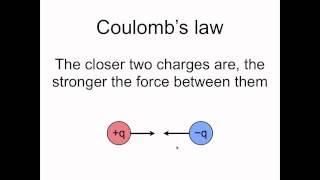
Coulomb's law
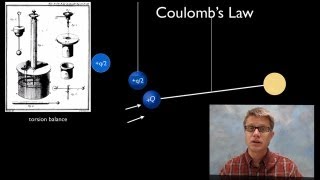
Coulomb's Law

Electrostatics (part 1): Introduction to Charge and Coulomb's Law

Coulomb's Law

Electric Charges: "Coulomb's Law" 1959 PSSC; Eric Rogers; Princeton University

What's a Coulomb?

Electric Force, Coulomb's Law, 3 Point Charges, Physics Problems & Examples Explained

Coulomb's Law
-
What is a Coulomb? An Explanation
-
Physics - what is a coulomb, ampere, volt
-
Coulomb's Law | Electrostatics | Electrical engineering | Khan Academy
-
Electric Charge: Crash Course Physics #25
-
8.02x - Lect 1 - Electric Charges and Forces - Coulomb's Law - Polarization
-
Coulomb's law
-
Coulomb's Law
-
Electrostatics (part 1): Introduction to Charge and Coulomb's Law
-
Coulomb's Law
-
Electric Charges: "Coulomb's Law" 1959 PSSC; Eric Rogers; Princeton University
-
What's a Coulomb?
-
Electric Force, Coulomb's Law, 3 Point Charges, Physics Problems & Examples Explained
-
Coulomb's Law
What a coulomb actually measures
A coulomb is the standard unit of electric charge. It tells you how much charge has moved past a point in a circuit. One coulomb equals the charge carried by approximately 6.24 quintillion electrons. That number is large, but in practice you work with coulombs through everyday measurements like amps and seconds.
The unit is named after Charles-Augustin de Coulomb, an 18th-century French physicist who studied the forces between charged objects. His work gave electricians and engineers a shared language for talking about charge, and that language still runs through every electrical code and calculation you will meet in training.
The relationship between coulombs, amperes, and time
Current is measured in amperes, often called amps. One ampere means one coulomb of charge passes a point every second. Write that as a formula:
Charge (C) = Current (A) × Time (s)
So if a circuit carries 5 amps for 3 seconds, 15 coulombs of charge have moved. That connection between charge, current, and time is one of the first relationships you use when you start working through electrical theory in any apprenticeship or trade program.
Why the coulomb matters for real electrical work
You might wonder why you need to know about charge at all. Most on-the-job talk is about volts, amps, and watts. But those units only make sense once you understand what charge is and how it moves. Voltage is the pressure that pushes charge through a conductor. Current is the rate at which charge flows. Power describes how fast a circuit does work using that moving charge. Remove the coulomb from the picture and the rest of the math loses its foundation.
Battery capacity is a direct example. A battery rated at 100 ampere-hours can deliver 100 amps for one hour, which equals 360,000 coulombs of total charge. Knowing this helps you size battery banks for solar installations, backup systems, and electric vehicle charging equipment, all of which are growth areas for working electricians right now.
Coulomb’s law and the force between charges
Coulomb’s law describes the force between two charged objects. The force depends on the size of each charge and the distance between them. Move the objects twice as far apart and the force drops to one quarter of its original value. That inverse-square relationship shows up in antenna design, capacitor theory, and the study of electric fields.
The law is written as:
F = k × (q1 × q2) / r²
Here, F is the force in newtons, q1 and q2 are the two charges in coulombs, r is the distance between them in meters, and k is Coulomb’s constant, approximately 8.99 × 10⁹ N·m²/C². You will see this in electronics coursework and in any program that covers electrical theory at depth.
Attractive and repulsive forces
Like charges repel each other. Unlike charges attract. A positive charge and a negative charge pull toward each other. Two positive charges push apart. This principle explains how electrons stay bound near nuclei, how capacitors store energy, and why insulating materials prevent charge from flowing where you do not want it to go.
In practical wiring work, understanding charge behavior helps you recognize why certain insulation ratings exist and why clearance distances in panels and switchgear are specified in codes like the National Electrical Code (NEC), the set of rules that governs electrical installation in the United States.
How coulombs connect to other electrical units
The coulomb sits at the center of several units you will use constantly in electrical work.
Volts and electron-volts
One volt is defined as one joule of energy per coulomb of charge. If a 12-volt battery moves one coulomb of charge through a circuit, it transfers 12 joules of energy. That direct link between voltage and charge is why voltage is sometimes called “electric potential,” meaning the potential energy available per unit of charge.
In electronics, you will also see the electron-volt (eV), which is the energy one electron gains when it moves through a one-volt potential difference. One electron-volt equals about 1.6 × 10⁻¹⁹ joules. This unit appears in semiconductor physics and in discussions of photovoltaic cells used in solar panels.
Farads and capacitance
A farad is the unit of capacitance, and it is defined directly in terms of coulombs. One farad means a capacitor stores one coulomb of charge for every volt applied across it. Most practical capacitors are measured in microfarads (millionths of a farad) or picofarads (trillionths of a farad), because one farad is a very large amount of capacitance for typical circuits.
Capacitors appear in motor start circuits, power factor correction systems, and filtering circuits in electronics. Understanding how charge accumulates on capacitor plates, and how quickly it releases, helps you troubleshoot motor failures and power quality problems in commercial and industrial settings.
Coulombs in Ohm’s law calculations
Ohm’s law states that voltage equals current multiplied by resistance (V = I × R). Because current is defined as coulombs per second, every Ohm’s law calculation you do is built on the coulomb underneath. Recognizing that connection gives you a cleaner mental model of what is actually happening inside a circuit when you adjust resistance or change the supply voltage.
Electrostatics and safety on the job
Electrostatics is the study of charges that are not moving. Static electricity builds up when materials rub against each other and electrons transfer from one surface to another. The charge that accumulates can be measured in coulombs, and even small amounts of static charge can damage sensitive electronics or ignite flammable atmospheres.
Electrostatic discharge (ESD) in electronics work
Electrostatic discharge, or ESD, happens when a built-up charge suddenly moves from one object to another. A spark you feel when touching a metal door handle in winter is ESD. In electronics work, invisible ESD events can destroy microchips and circuit boards before you even know they happened. That is why technicians wear grounding straps, work on anti-static mats, and store components in shielded bags. All of those practices are about controlling coulombs of stored charge.
Static charge in industrial environments
In industrial settings, static charge buildup is a fire and explosion hazard. Fuel tankers are grounded before filling to bleed off static charge. Grain elevators and paint spray booths have strict bonding and grounding requirements for the same reason. Electricians who work in these classified locations, defined by the NEC as hazardous locations, need a solid understanding of how charge accumulates and how grounding paths discharge it safely.
Learning electrical theory: what training programs cover
Electrical training programs in the United States generally follow two paths. You can enter a formal apprenticeship, typically run by a union or a contractor association, or you can complete a certificate or associate degree program at a community college or trade school and then enter the workforce as a helper or trainee.
Both paths cover electrical theory, and the coulomb is part of that theory. In most programs, you study it during the first term alongside Ohm’s law, Kirchhoff’s laws, and basic circuit analysis. Understanding charge early makes the rest of the theory easier to follow, because so many other concepts build on it.
What to look for in an electrical program
When you compare programs, look at whether the curriculum covers theory and lab work together. Hands-on wiring practice without theory leaves gaps. Theory without lab time makes it harder to picture what the math describes. Good programs connect the two from the start.
Check whether the program prepares you for a licensing exam. Most states require journeyman or master electrician licenses, and those exams test electrical theory including units like coulombs, volts, and ohms. A program that covers theory thoroughly gives you a better base for that exam.
Also look at program length. Certificate programs often run one to two years. Associate degree programs typically take two years. Apprenticeships usually run four to five years and combine paid on-the-job training with classroom instruction. Each path leads to the same license exam, so your choice depends on how you learn best and how quickly you want to start earning while you train.
Subjects that build on coulomb theory
Once you understand the coulomb and basic charge relationships, the following subjects become easier to follow in your coursework:
- AC and DC circuit analysis, where current flow and charge movement are central concepts
- Motor theory, because motor starting and running currents involve large charge flows
- Power systems, where utility companies measure energy delivery in kilowatt-hours, a unit tied directly to charge flow over time
- Photovoltaic systems, where solar cells generate current by freeing electrons from semiconductor materials
- Industrial controls, where capacitors and timing circuits rely on predictable charge and discharge rates
Electrical careers that use this knowledge
Understanding electrical theory, including the coulomb and related concepts, opens doors across several career tracks. Residential electricians wire homes and light commercial buildings. Commercial and industrial electricians work in offices, factories, and utility infrastructure. Electronics technicians design and repair circuit boards and control systems. Power line workers install and maintain the high-voltage lines that carry electricity from generators to your neighborhood.
Each of these careers uses electrical theory at different depths. Residential work is more code-focused and less calculation-heavy. Industrial and commercial work involves more troubleshooting and more formal circuit analysis. Electronics technician roles often require the deepest theory background, because diagnosing a failed circuit board requires you to trace charge paths through complex schematics.
The broader your theory knowledge, the more roles you qualify for and the easier it is to move between specializations as your career develops.
Next steps for your electrical training
If you are serious about an electrical career, the best move is to start comparing programs in your area now. Look at apprenticeship applications through your local IBEW (International Brotherhood of Electrical Workers) chapter or NECA (National Electrical Contractors Association) training trust. Check community college catalogs for electrical technology programs. Ask each program directly how it covers electrical theory and whether it prepares you for your state licensing exam.
The coulomb is one small piece of a large body of knowledge, but it is a foundational piece. Programs that teach it clearly, and connect it to real circuit behavior, tend to build stronger technicians across the board. Use that as a filter when you evaluate your options.
Browse the electrical training programs listed on this site to find options near you and start the application process.


